
Father-Son Dynamic
No Longer HumanExamines Yozo's relationship with his father, a figure of authority and fear, whose expectations and death shaped Yozo's sense of self.
increasing Bearing strength in each event
 decreasing
Bearing strength in each eventdecreasingThe Lion Mask Favor
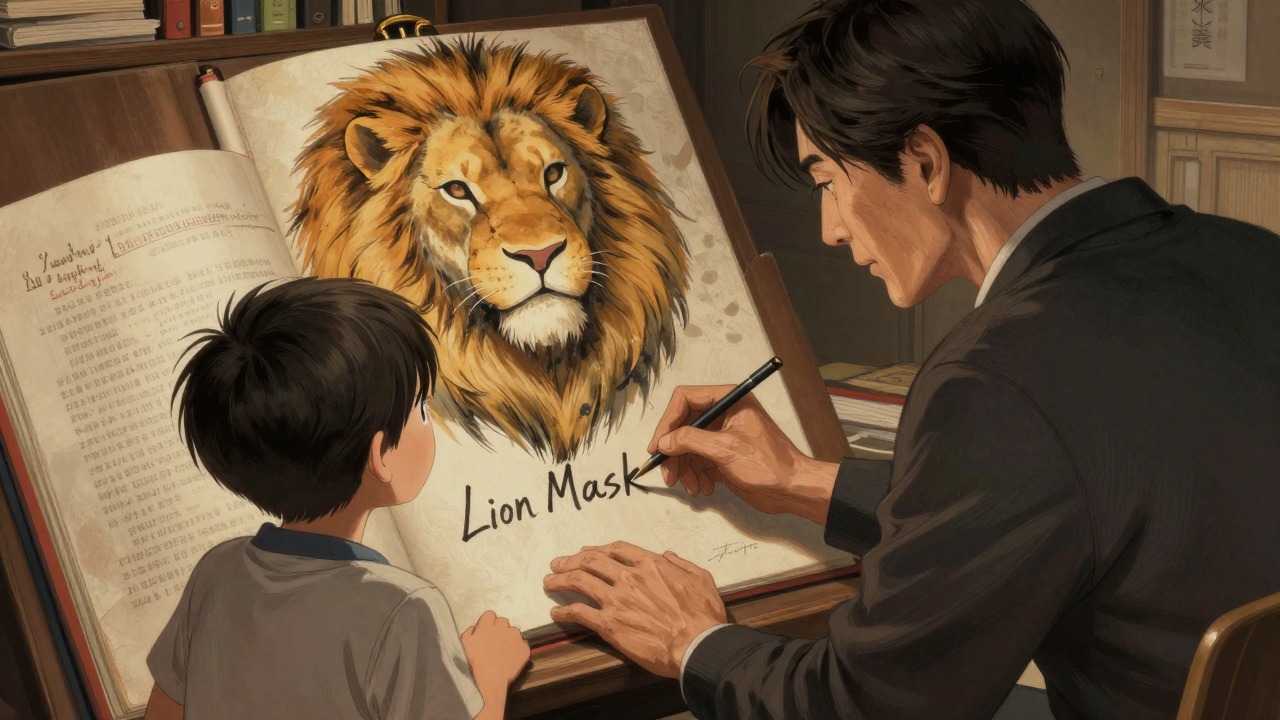
The Father's Approval
The Notebook Incident
Yozo's father asked each child what they wanted from Tokyo. Yozo, unable to answer, later snuck into the study and wrote "Lion Mask." This act of appeasement was a desperate attempt to win his father's love.
The Father's Reaction
When his father discovered the note, he was amused and proud. Yozo heard him say, "He's certainly a funny kid." The approval was brief but precious.
The Cost of Obedience
Yozo learned that his father's love was conditional on his performance. He would spend his life trying to please authorities he feared.
The Father's Political Meeting
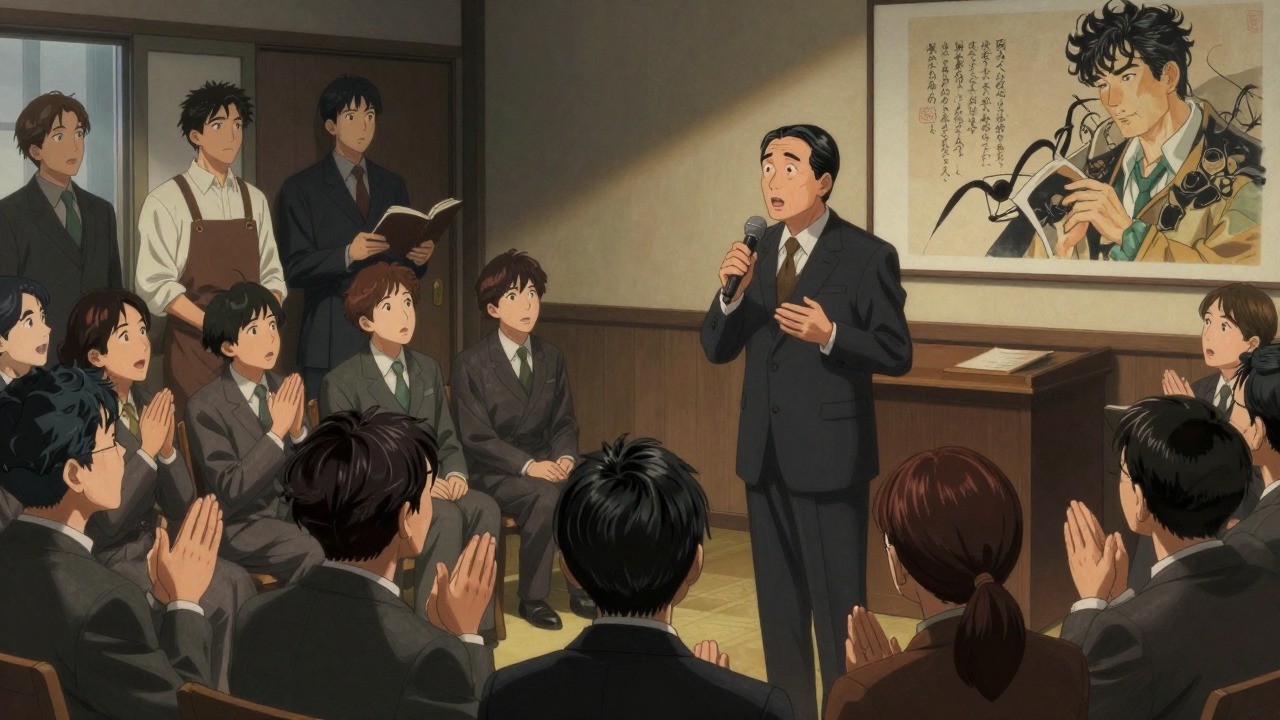
A Lesson in Hypocrisy
The Speech
Yozo was taken to hear his father speak at a political meeting. The audience, including his father's friends, praised the speech loudly.
The Truth Heard
On the way home, the same people mocked the speech bitterly. The servants also complained, but later told his mother it was interesting. Yozo was shocked by the universal insincerity.
The Seed of Distrust
This incident taught Yozo that human beings are inherent liars, and that even his father was part of a world of mutual deception. This deepened his alienation.
College and Father's Plans
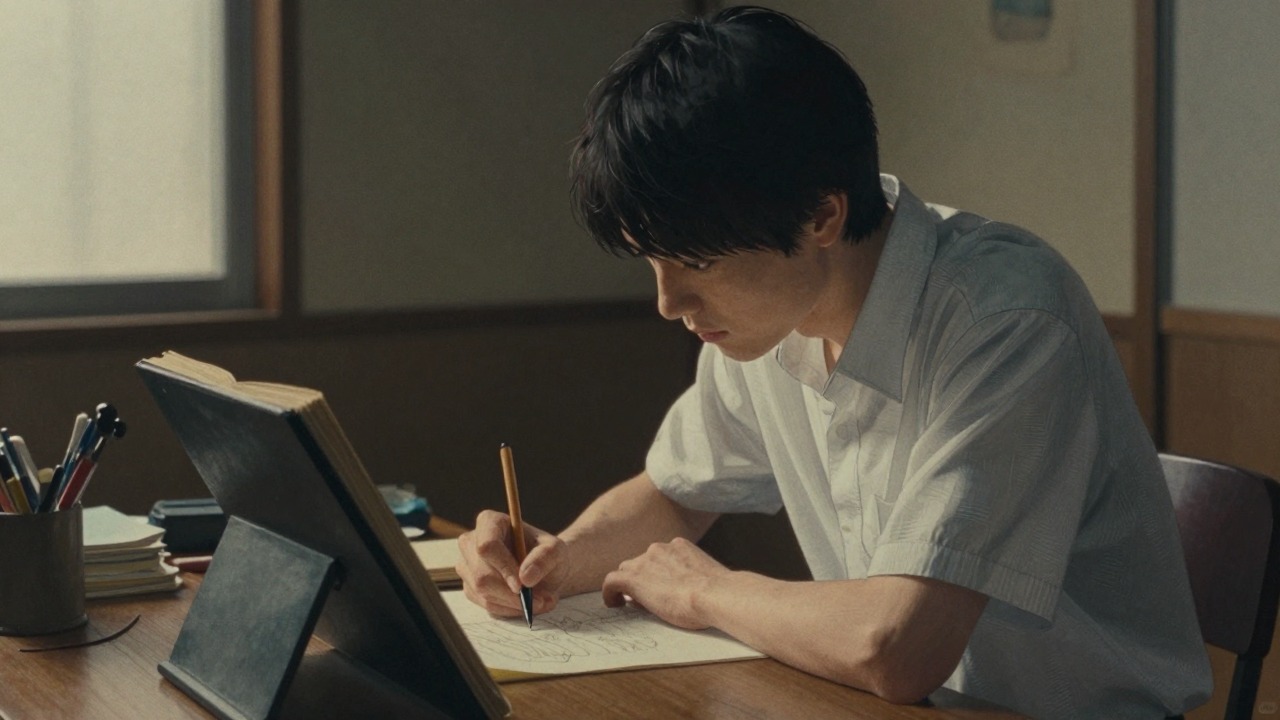
The Father's Will
The Career Choice
Yozo's father decided he should become a civil servant and entered him in a college. Yozo, unable to resist, obeyed. He felt that his life was not his own.
The Escape into Art
While living in his father's house in Tokyo, Yozo cut classes and studied painting secretly. He was caught between filial duty and his own desires.
The Growing Strain
Yozo's father's presence in the house was always intimidating. When the house was sold, Yozo felt a mix of relief and abandonment.
The Father's Anger After the Suicide
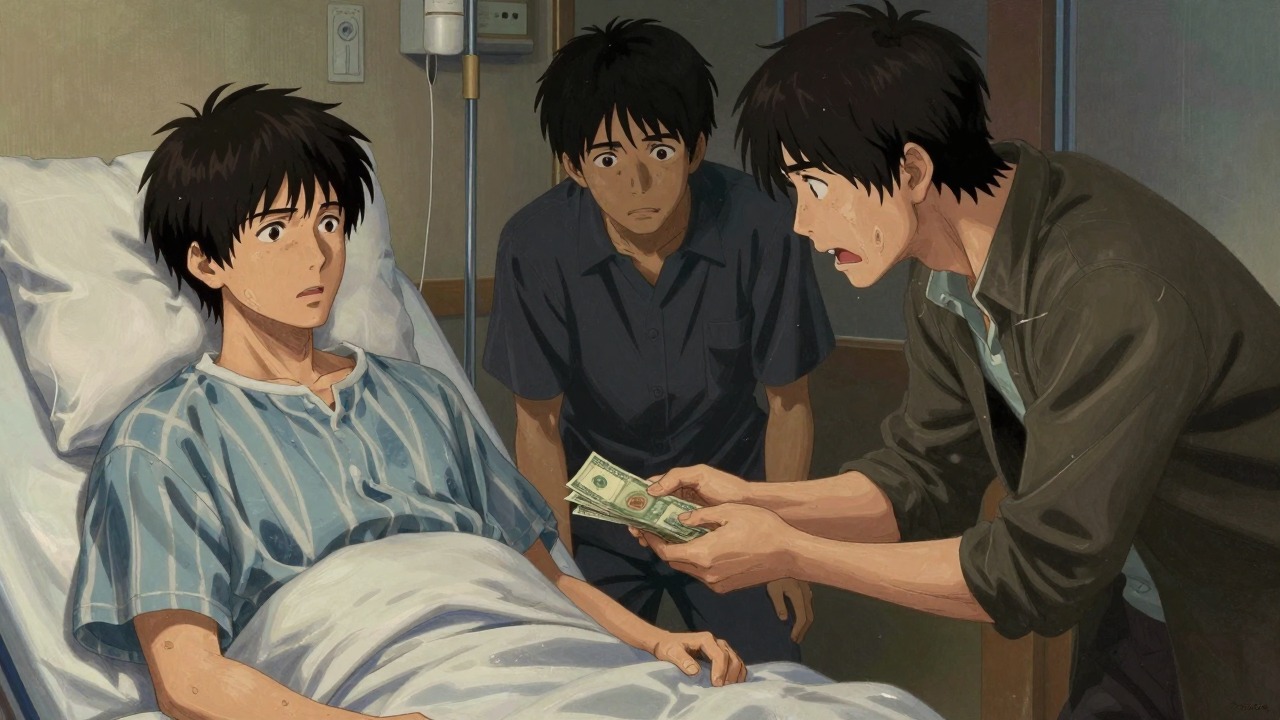
The Disownment Threat
The Rumor
Yozo's relative told him that his father was so enraged that he might be disowned. Yozo, already in hospital, felt a cold fear. He had lost his father's favor.
The Secret Allowance
Later, Yozo's brothers sent money secretly, without his father's knowledge. This showed that the family still cared, but the father's wrath was a permanent shadow.
The Need for Forgiveness
Yozo's longing for his father's approval never died. He wrote a desperate letter confessing his sins, but received no reply. The silence was worse than punishment.
Father's Death
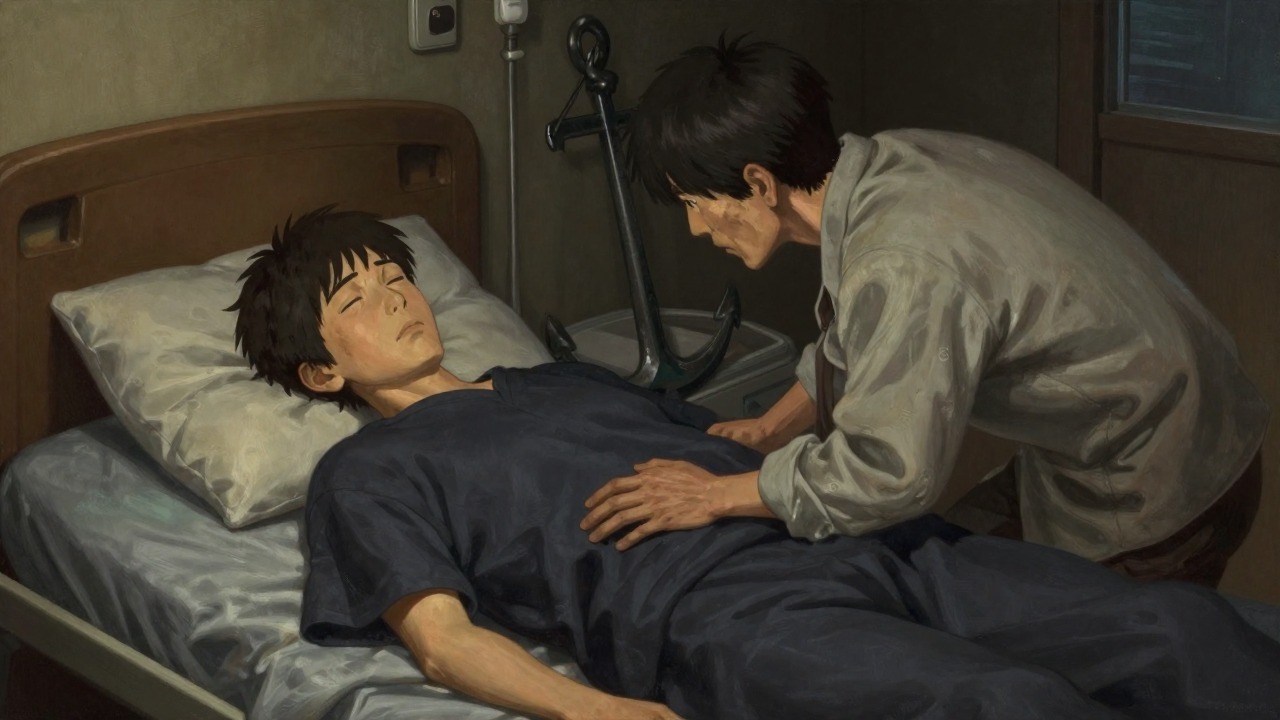
The Liberation and Emptiness
The News
Yozo's brother and Flatfish came to the hospital to tell him that his father had died. Yozo felt as if the vessel of his suffering had become empty.
The Loss of the Anchor
His father had been a constant, terrifying presence. Now that he was gone, Yozo had no one to fear or to seek approval from. He was truly alone.
The Exit from the Asylum
His brother took him out of the hospital and sent him to live in the countryside. Yozo mechanically obeyed, a ghost of a man.
Living as a Reject
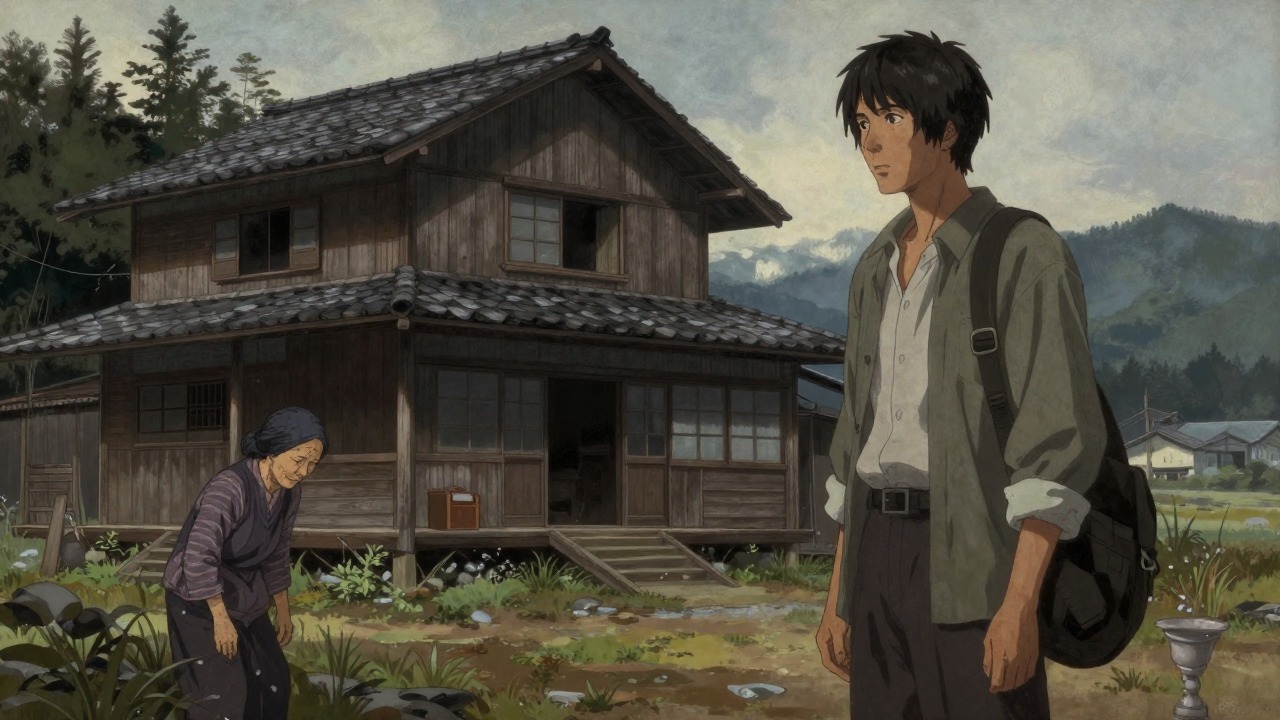
The Father's Legacy
The Country House
Yozo's brother bought him a run-down house at a hot spring. He was cared for by an ugly old woman, Tetsu. He had no purpose, no ambition.
The Memory of Father
Yozo still thought of his father, but now with a distant, emotionless detachment. The fear that had driven him was gone, but so was any will to live.
The Final State
Yozo ended as a grey-haired man of twenty-seven, incapable of feeling either happiness or unhappiness. His father's death had completed the erasure of his identity.
childhood, age about ten
childhood
after high school, entering college
after the Kamakura incident
during Yozo's stay in the mental hospital
after father's death, three years in the country
